

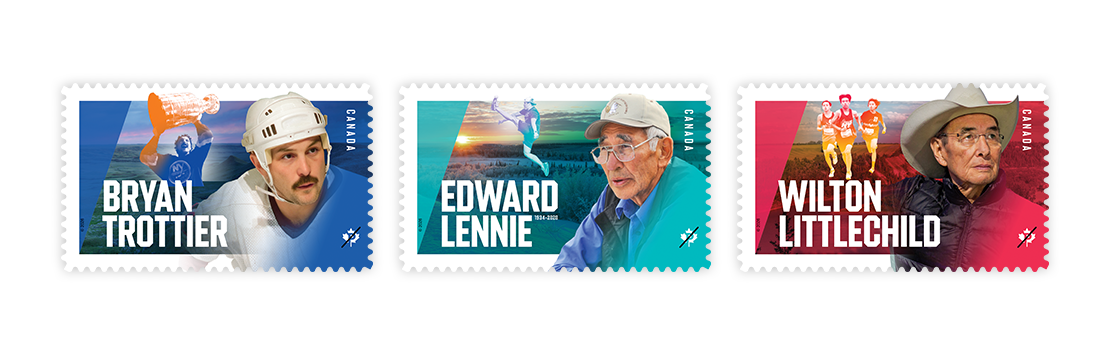
Bryan Trottier
“The guy who can’t lose. The guy who finishes in a quiet way. Not loud. Not dirty. Relentless. Skilled. Smart. He wasn’t the fastest skater, but… he was solid on his skates and strong on his stick. You didn’t knock him over. He led by example. Led by tenacity. He was honest. He was humble.”
-Mike Liut, former NHL goaltender
Images courtesy of Hockey Hall of Fame; Hockey Hall of Fame/Mecca; Hockey Hall of Fame/Dave Sandford; Hockey Hall of Fame/Lewis Portnoy; Hockey Hall of Fame/DiMaggio Kalish; Hockey Hall of Fame/O – Pee-Chee; Hockey Hall of Fame/Robert Shaver; Hockey Hall of Fame/Paul Bereswill; CBC Archive Sales; The Canadian Press; NHL, the NHL Shield and the word mark and image of the Stanley Cup are registered trademarks of the National Hockey League. NHL and NHL team marks are the property of the NHL and its teams. © 2026 NHL. All Rights Reserved.
Bryan Trottier started playing competitive hockey at age eight. While that’s considered late, the young athlete defied the odds to become a record-breaking, nine-time NHL© All-Star who won the Stanley Cup® six times over an 18-year career.
From humble beginnings in rural Saskatchewan, Trottier — who is Cree, Métis, Chippewa, and Irish — learned to skate on a frozen creek that his father flooded by breaking up a beaver dam.
At 15, Trottier started playing junior hockey with the Swift Current Broncos, 120 km away from home. After notching 112 points in 68 games as a 17-year-old, Trottier was drafted 22nd overall by the New York Islanders in 1974. What he lacked in size, speed and standout skills he made up for with smarts, tenacity, exceptional playmaking, hard work, toughness and leadership.
In 1975, he was named MVP of both the Western Canadian Hockey League and the World Junior Hockey Championships. In the 1975–76 NHL© season, the 19-year-old set an NHL© rookie record with 95 points and won the 1976 Calder Memorial Trophy as rookie of the year.
Trottier was the No. 1 centre on one of the greatest dynasties of the NHL© – the linchpin, in many eyes – on a dominant team. He had five straight 100-point seasons. His 27-game points streak in the playoffs remains a New York Islanders record.
Trottier retired in 1994 and, in 2003, began organizing visits to Indigenous communities across Canada with the Aboriginal Alumni Hockey Team. The team has toured across the country to provide ice skating lessons and hockey clinics to youth.
Edward Lennie
“He was… a very true, natural leader and a traditional man….He was very much an inspirational person without really knowing it.”
–Nellie Cournoyea, former NWT Premier
© NWT Archives/James Jerome fonds/N-1987-017: 2774; Photo and video archives provided by Inuvialuit Communications Society, the Northern Games Society, and the family of Edward Lennie; CBC Archive Sales; Hans Lennie, courtesy Inuvialuit Digital Library; The Canadian Press
Known as the Father of the Northern Games, Charles Edward Inglangasak Lennie (1934-2020) was a respected Elder and leader of the Inuvialuit community who dedicated his life to promoting and preserving Arctic sports.
Forced to attend a residential school when he was eight years old, Lennie returned to his family three years later and started learning centuries-old traditional games. These sports built strength agility, endurance and pain tolerance – skills that helped Inuit survive and thrive in harsh Arctic conditions for millennia.
Decades later, these games were being left behind as more Inuit moved into towns and other communities. Lennie began hosting early versions of the Northern Games at his home in the 1960s, helping to revive traditional ways. His home became a gathering place for youth who were eager to reconnect with their heritage.
When Lennie heard that the first Arctic Winter Games were going to be held in Yellowknife in 1970, featuring hockey, basketball and badminton, he thought, “How could they call something the Arctic Winter Games when there was nothing Arctic about them?” According to the Canadian Sports Hall of Fame, after consulting his Elders, he successfully lobbied the organizers to include traditional Inuit games as a groundbreaking showcase for Arctic sports. At the inaugural Arctic Winter Games, Lennie coached athletes in eight events, including the kneel jump, two-foot high kick, and arm pull.
A father figure and mentor to many young Indigenous people, Lennie helped rehabilitate many young offenders through a trapper training program he ran out of his cabin. He was known for encouraging children to always do their best and never say the words “I can’t.”
Chief Wilton Littlechild
“Honour the blessing that you have physically and then combine it with the mental and the spiritual and cultural, so that you have a wholesome foundation for life.”
-Chief Wilton Littlechild
Getty Images; UN Photo/Rick Bajornas; UN Photo/Kim Haughton; The Canadian Press; Government of Alberta; Courtesy of Concordia University; Edmonton Journal, a division of Postmedia Network Inc.; CBC Archive Sales; Image courtesy Terry Lusty
The first Treaty First Nation person from Alberta to earn a law degree and the first in Canada to be elected as a Member of Parliament, Wilton Littlechild is internationally recognized as a pioneer of the global Indigenous rights movement. A Survivor of the residential school system, Littlechild was abused and stripped of his name as a young boy. He credits sport with saving his life.
As an athlete, Littlechild won more than 70 provincial, regional, national or international championships. He attended the University of Alberta, where he was on the hockey and diving teams and managed the football and basketball teams.
He would go on to create and coach the first all-Indigenous junior hockey team in Alberta, and help establish the National Indian Athletic Association, the North American Indigenous Games and the World Indigenous Nations Games. He also coached Alberta’s first all-Indigenous junior hockey team and was inducted into several sports halls of fame, including Canada’s Sports Hall of Fame (2018).
Littlechild opened his law practice on the Ermineskin reserve in 1977. He went on to contribute to the writing of the UN Declaration on the Rights of Indigenous Peoples, and, after Cree elders asked him to represent them internationally, he addressed the UN about treaties with Indigenous peoples that the Crown had violated. He successfully argued in British courts to delay the patriation of Canada’s constitution until it included the Crown’s Treaties and guarantees of Indigenous rights.
In 2009, Littlechild was named a commissioner of the federal government’s Truth and Reconciliation Commission of Canada.
Littlechild was bestowed with the Alberta Order of Excellence and made a Companion of the Order of Canada. He remains a symbol of resilience and a champion of Indigenous rights and sports.
This is the fifth issue in that ongoing series issued annually on National Indigenous People’s Day. Selection of this year’s leaders was guided by the Assembly of First Nations, the Métis National Council and Inuit Tapiriit Kanatami.
Product: Indigenous Leaders 2026: Booklet of 6 Permanent™ stamps
Article: 414320111
Quantity: 120,000 booklets of 6 Permanent™ stamps
Printing process: Stamp side – Lithography in 4 colours + matte spot and gloss spot varnish / Cover side – Lithography in 6 colours + gloss varnish
Price: $7.44
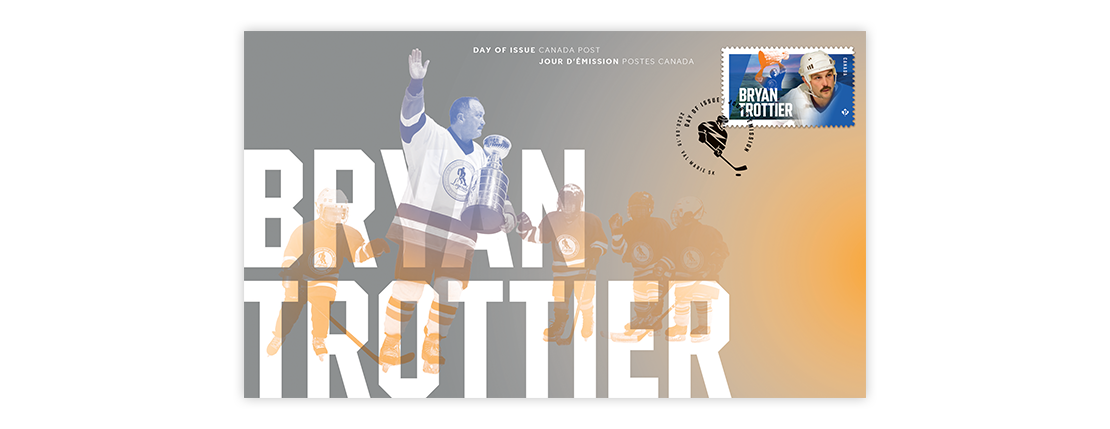
Product: Indigenous Leaders 2026 – Brian Trottier: Official First Day Cover
Article: 414320131
Quantity: 5,000
Cancel: Val Marie SK
Price: $2.24
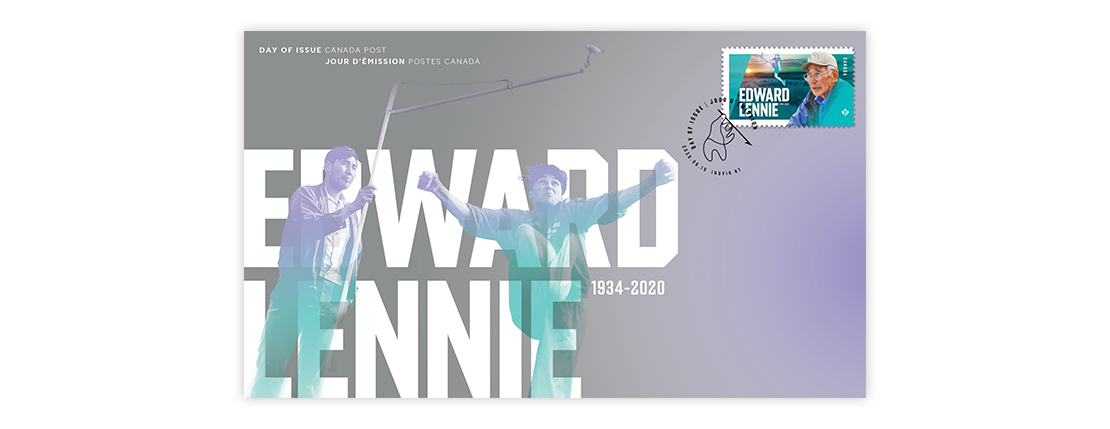
Product: Indigenous Leaders 2026 – Edward Lennie: Official First Day Cover
Article: 414321131
Quantity: 5,000
Cancel: Inuvik NT
Price: $2.24
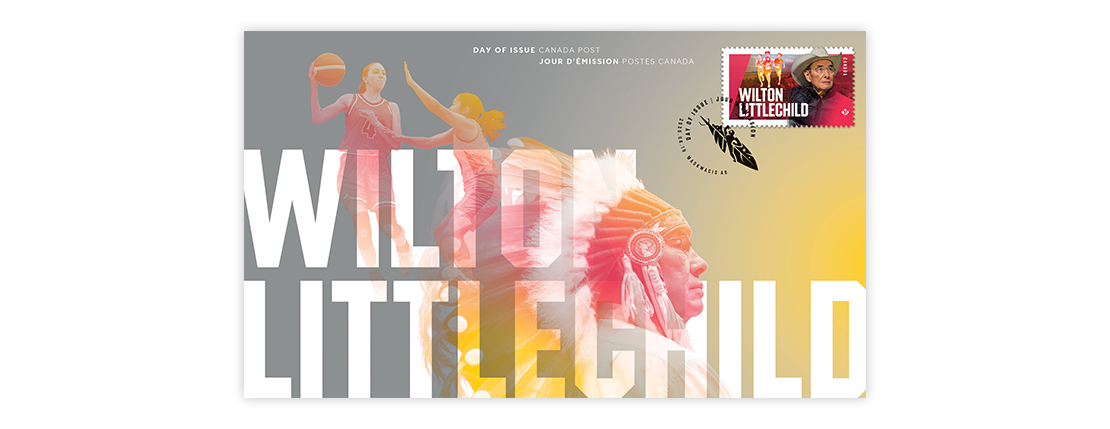
Product: Indigenous Leaders 2026 – Wilton Littlechild: Official First Day Cover
Article: 414322131
Quantity: 5,000
Cancel: Maskwacis AB
Price: $2.24
Design: Tétro
Printer: Colour Innovations
New stamps pay tribute to Bryan Trottier, Edward Lennie and Wilton Littlechild
Available now