

At a glance
- Crowded, algorithm-driven feeds make social media harder for brands to stand out on their own.
- Direct mail is a personal, trusted and tangible touchpoint that grounds digital marketing in the real world.
- When used together, direct mail and social media create connected marketing campaigns that get attention, drive action and engage in news ways.
Social media might feel a whole lot less social today. But the opportunity it offers hasn’t gone anywhere.
Once, our feeds were filled with family and friends sharing memories and milestones, vacation snapshots and inside jokes. Today, however, algorithms and AI are making it harder to sort the meaningful from the manufactured.
All this means brands need more than the feed to succeed.
The strongest marketing strategies build connected experiences across channels. While social media remains powerful, it needs a channel designed for the intimacy it abandoned. It needs a way to build more personal, tangible, trusted connections. It needs direct mail.
Direct mail brings your brand into the real world (and into people’s hands and homes) in a way that cuts through the noise and creates meaningful brand moments beyond the screen.
Together, social media and direct mail don’t compete. They strengthen each other.
Go beyond the scroll. Boost your campaign results with direct mail.
Direct mail solutions
Why yesterday’s social media strategies won’t cut it
For years, social media has been the engine of digital marketing: Build a following. Post regularly. Engage authentically. Watch the reach grow.
But the rules have changed.
Organic reach isn’t what it used to be
It’s no longer enough to have a large audience. Algorithms decide what gets seen, and organic reach has been steadily shrinking. The days of “post it and they will see it” are gone.
Paid media faces rising costs and falling impact
Boosting posts or running ads can help visibility, but competition for attention is fierce. More brands are bidding for the same audience segments, driving up costs. At the same time, ad fatigue is real. Audiences scroll faster. Click-through rates are harder to sustain.
Engagement doesn’t equal connection
Likes, shares and comments are useful metrics, but they don’t necessarily translate into trust, loyalty or conversions. In a feed dominated by influencer partnerships, trending topics and brand campaigns, engagement can be fleeting.
Without deeper, more personal touchpoints, it’s hard to build lasting relationships that turn into sales, revenue and return on your marketing investment.
Trust is hard to earn and easy to lose
Audiences are more skeptical of what they see online. They know feeds are curated, ads are targeted and much of the content is sponsored. That awareness can make brand messages feel less authentic even when well-intentioned. In this climate, credibility is a competitive advantage – and credibility is something digital alone can struggle to deliver.
With the old strategies no longer delivering, we get that it might be tempting to abandon social media. Don’t. In fact, you should strengthen your social media by adding a channel that can build trust in your brand, capture attention and drive audiences back to your digital platforms. That channel is direct mail.
Direct mail strategies that drive social engagement
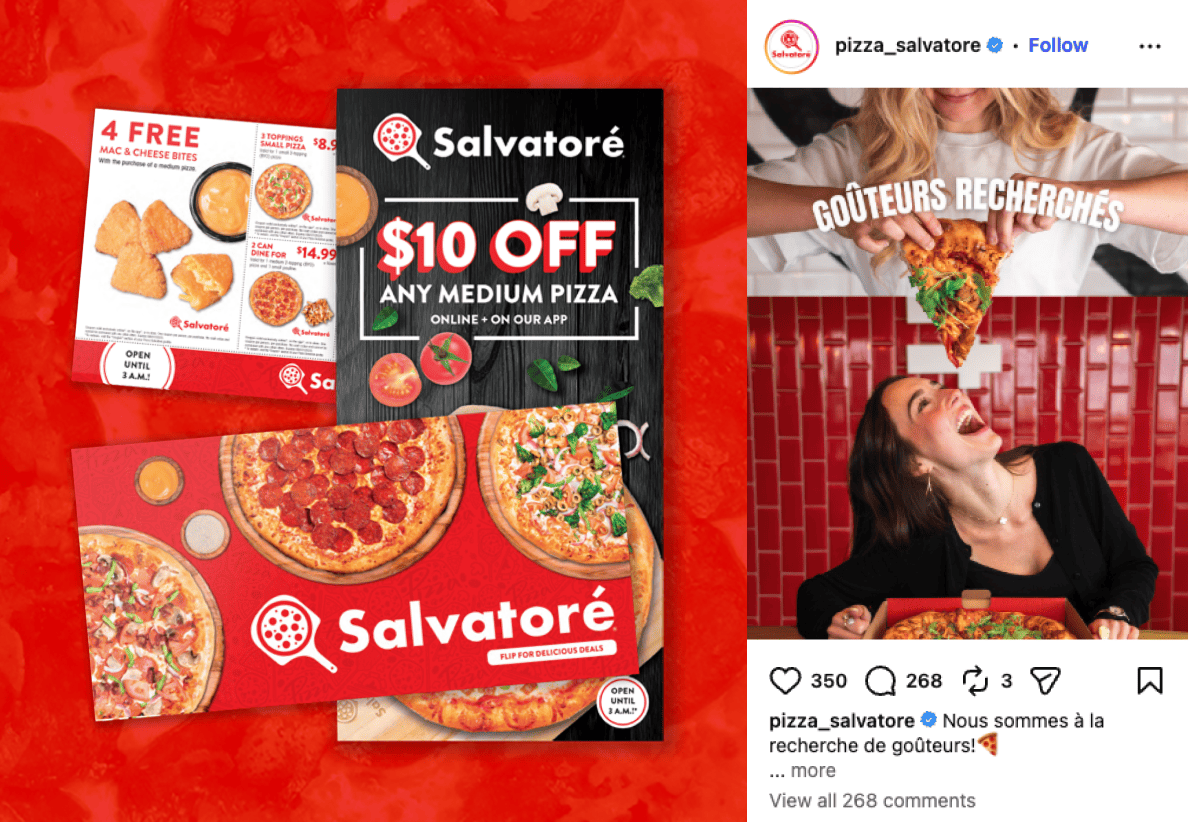
Attention is scarce. Trust is fragile. That means the most effective move isn’t to shout louder, it’s to show up differently. Direct mail offers a tangible, trusted and memorable way to connect with audiences, while also driving them back to your digital platforms.
How’s that, you ask?
It cuts through the clutter
In a digital feed, your content competes with hundreds of other posts in seconds. In the mailbox, it competes with a handful of intentional items and often wins. So, it’s no wonder that a creative piece in the mailbox will surprise and delight your audience.
It builds credibility and trust
Direct mail is deliberate. It’s a physical signal that your brand values the relationship enough to invest in a tangible touchpoint. Nearly half (49%) of consumers view brands that send mail as more credible than those that rely solely on digital. Among high-income earners, that credibility is even stronger, a critical advantage in trust-driven industries.
It personalizes in ways digital can’t
Seeing your name and your address on a printed piece can spark interest and connection. But personalization in direct mail goes well beyond “Dear [First Name Goes Here]”
Create a connection that feels thoughtful and relevant by applying your data to direct mail to acknowledge past purchases and/or recommend relevant products.
Two-thirds (67%) of consumers say a personalized element prompted them to act. Perhaps that’s why major brands like Sephora use direct mail to retarget abandoned online carts to drive their customers back online and complete the sale.
It drives digital engagement
Picture direct mail as a launchpad. Consumers are more likely to engage with brands that combine direct mail and digital. Many take immediate action: Visiting a website. Searching for the brand. Checking reviews. Following on social media. QR codes, personalized URLs and trackable offers make the transition seamless and measurable.
It delivers lasting impressions
Think of the last time you received and flipped through a printed catalogue. Unlike a fleeting social post, a catalogue often lives in the home for days or weeks earning multiple views and impressions from everyone in the household. That’s repeat exposure without the algorithm deciding whether your audience sees it. Each time someone picks it up, they’re re-engaging with your brand on their own terms.
It cultivates empathy
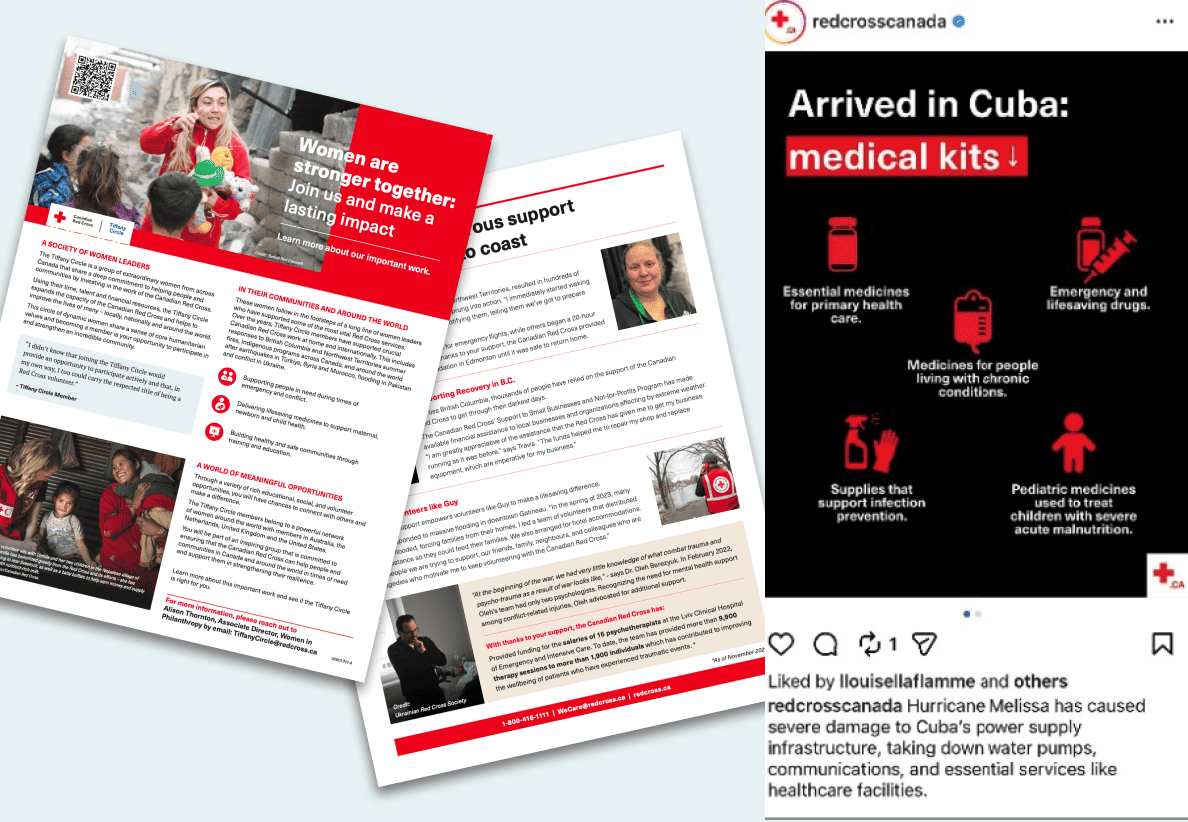
For not-for-profits, social media is a powerful way to share stories, rally supporters and raise funds. But in crowded feeds, even the most compelling mission can be missed. Direct mail gives your cause a physical presence while driving them back to your social channels for deeper engagement.
Not-for-profits like the Canadian Red Cross use printed storytelling – think about a donor impact report, event invitation, thank-you letter – to build trust and credibility. It also bridges offline passion to online action.
It resonates across generations
Younger audiences engage with direct mail more than you might expect. The vast majority of Gen Z and Millennials interact with it, and many are comfortable using QR codes to connect instantly online. Older audiences value its credibility and keepability.
The result? A channel that works across demographics, each for their own reasons.
Proven plays to connect the mailbox to the social feed
Here are a handful of ways direct mail can make your social campaigns work harder:
The follower funnel
Goal | Grow your social audience.
Action | Be sure to always include an invitation to follow your social media accounts on your direct mail.
Why direct mail works | A printed piece stands out in a way a digital ad can’t. It’s personal; it’s in their hands; it bypasses the algorithm entirely. By delivering a clear, physical invitation to follow you, you create a moment of focus that’s rare in the scroll.
Social tip | Add a QR code that takes recipients straight to your Instagram profile to make it easy to follow.
The social exclusive
Goal | Drive urgency and engagement.
Action | Promote an offer only available through your social channels.
Why direct mail works | Social-only offers can get lost in crowded feeds. A physical reminder in the mailbox keeps the offer top-of-mind and gives it perceived value. Recipients are more likely to act when they’ve seen it offline first, and then again online.
Social tip | Reinforce the same offer in both direct mail and social media to increase recognition and response. Multiple touchpoints and repeat exposure to your marketing messages increase the effectiveness of your offers.
The share trigger
Goal | Generate organic reach.
Action | Create a mail piece designed to be photographed or filmed for social, especially something unique, tactile or interactive.
Why direct mail works | People love to share experiences, and a surprising, creative mail piece can become content. Unlike a digital ad, a physical piece can be touched, opened and explored, giving recipients something to show off online.
Social tip | Include picture-worthy interactive formats and encourage recipients to post it on TikTok with a branded hashtag.
The integrated journey
Goal | Build momentum with coordinated touchpoints.
Action | Coordinate social, email and direct mail touchpoints as part of a connected customer journey.
Why direct mail works | It anchors the journey with a physical piece that prompts audiences to move between channels, multiplying the impact of each touchpoint.
Social tip | Tease the campaign in direct mail. Confirm the details in email. Drive engagement on your channel of choice.
The reconnect
Goal | Re-engage dormant customers.
Action | Send a personalized mailer reminding them of what they’re missing and why they should return.
Why direct mail works | Digital retargeting is easy to ignore, but a personalized mailer feels intentional and valued. It shows you’ve noticed their absence and care enough to reach out in a more personal way, thereby making them more likely to re-engage online.
Social tip | Include a QR code linking to a LinkedIn event invite, webinar or exclusive group. Make it something that feels like a VIP re-entry point into your brand’s community.
The user-generated content amplifier
Goal | Build authenticity and community.
Action | Showcase user-generated content in print and invite more contributions.
Why direct mail works | Featuring real customers in your mailer makes your brand feel more relatable and trustworthy. It’s a tangible way to celebrate your community, and it encourages others to join in — both offline and online.
Social tip | Print a collage of customer photos from Instagram Stories or TikTok videos and invite recipients to submit their own for a chance to be featured in your next mailer and on your social channels.
How to connect your social strategy with direct mail
Think of direct mail as the spark that ignites your social strategy. It grabs attention offline and drives audiences online.
Consumers are already more likely to engage when brands combine direct mail and digital channels. More than half of marketers already integrate direct mail in their social media strategy.
That means the opportunity is real to use direct mail to put the social back in your social media strategy.
Key takeaways
- Social media is still a powerful channel, but feeds are more cluttered and harder to cut through.
- Direct mail is more social than you might think, as it helps brands build trust, create personal connections and stay memorable.
- Mail can extend the impact of social by driving people back to your channels, website or offers.
- Direct mail can also spark digital action through QR codes, personalized URLs, social-only offers and user-generated content.
- The best results come from coordinated campaigns that use social media and direct mail together.
All statistics courtesy of:
The State of Direct Mail 2025: Consumer Insights Editon, Lob and Comperemedia, 2025.
Let’s get social!
Let our experts show you how to turn social media from a fleeting touchpoint into a lasting connection with direct mail.
Let’s talk